

I've been working on an academic paper this quarter. Not something I expected to say about myself in 2026, but here we are.
The paper is about human-AI decision frameworks in enterprise settings. Specifically, about how organizations decide which decisions to give to an AI and which ones to keep. And the more I dig into it, the more I think most companies are getting this wrong in a specific and predictable way.
They're treating it as a capability question. "Can the agent do this in a controlled demonstration?" Increasingly, the answer is yes. So they ship it.
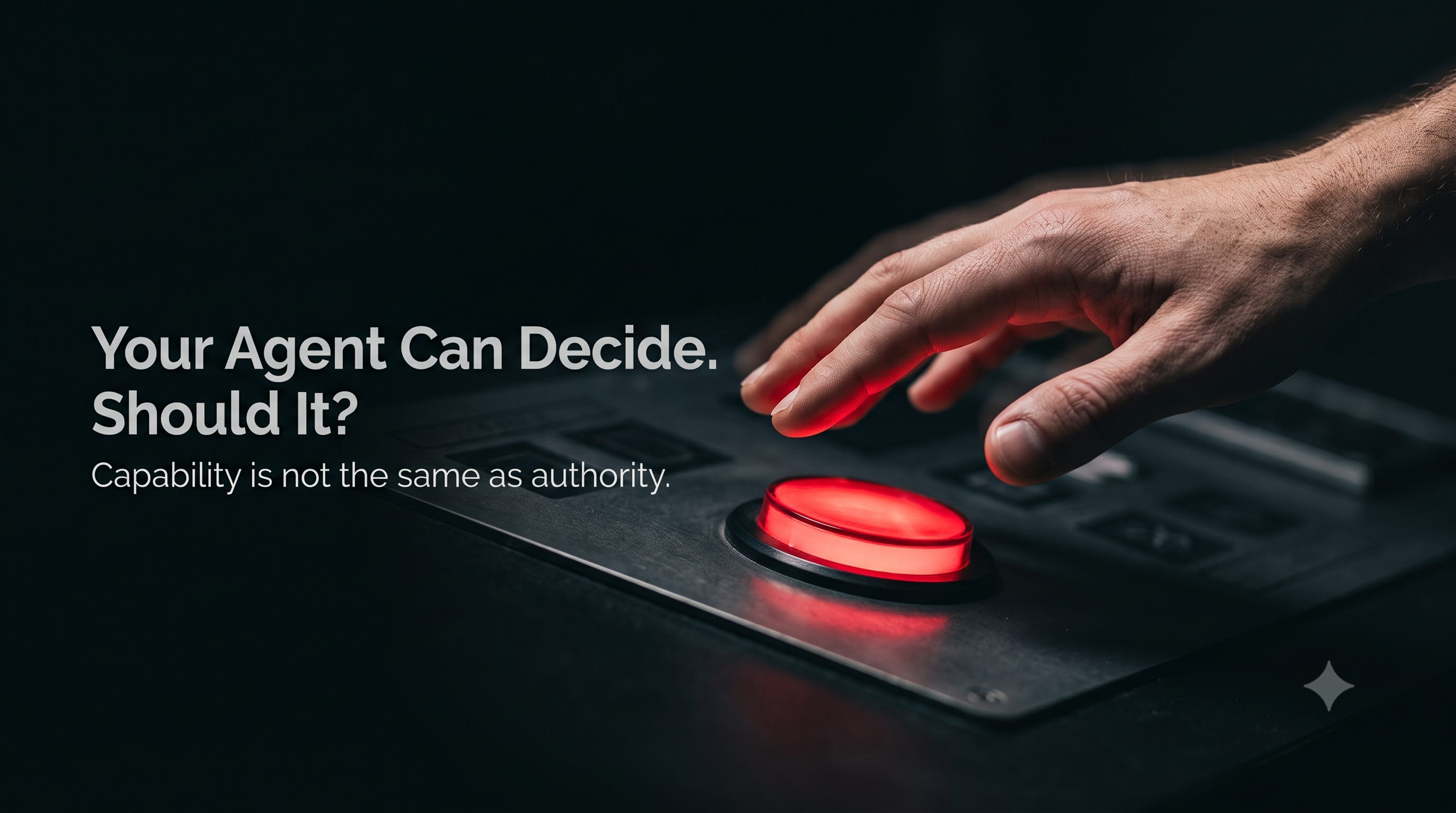
What they're skipping is the authority question. "Should the agent be the one deciding this?" That question is harder because it's not about the model. It's about accountability. About what happens when the agent is wrong. About who owns the outcome.
Here's the framework I've been building out.
There are three kinds of decision rights in any workflow.
First: low-consequence, easily reversible decisions. Routing a ticket, flagging an anomaly, generating a first-pass draft. Automate these. If the agent is wrong, the cost is low and a human reviews it before it matters.
Second: material but reviewable decisions. A pricing recommendation, a customer proposal, a content approval. Let the agent do the analysis and surface the options. But require a named human to approve before it moves. Both the accountable human and, where relevant, the affected customer should understand how AI shaped the recommendation.
Third: decisions that carry personal, legal, public, or relational accountability. A performance conversation, a public statement, a negotiation where trust is on the line. Use AI to prepare the evidence, challenge assumptions, and surface what you might miss. Keep the decision human.
Most enterprise AI deployments I see are blurring these categories. They're automating decisions that belong in the second or third bucket because the technology can handle it, without asking whether the accountability structure has been redesigned to match.
The result isn't AI failure. It's AI success that nobody trusts.
If you're building or positioning enterprise AI right now, I'd push you to map your workflows against those three decision rights before the next deployment. Not to slow things down. To make sure the speed you're getting is worth what you're giving up.
I'll share more from the paper when it's closer to publication.
Kuber
Most of what I write here leans on four frameworks, all published in full at kubersharma.com with nothing gated. The Pilot Trap is why enterprise AI that works in a demo still dies before production. If you run a marketing team and are arguing about what AI gets to decide on its own, that argument is The Augmented Marketing Decision Architecture. The Trust Architecture is the three layers of trust a buyer needs before they will deploy, and The Belief Bridge is how you get them there.